
Bromine Testing
Midwest Microlab is capable of testing solid or liquid samples for total percentage of Bromine with a range of 0.4% (4,000 ppm) to 100%. Accuracy for Bromine testing is +/- 0.4. Please refer below for a brief description of the Bromine analysis procedure including interferences and sample submission size. Air Sensitive / Glove Box handling is NOT available for Bromine analysis.
Halogen Testing
Bromine Testing
Chlorine Testing
Fluorine Testing
Iodine Testing
Finding Total Percentage of Bromine
Bromine Analysis & Techniques
Midwest Microlab performs Bromine analysis using the Schoniger Combustion Technique.
The solid sample is weighed into ashless paper and inserted into a custom made Platinum stopper. The stopper is fitted with a separatory funnel that is charged with the appropriate reagents. The resulting liquid is removed via washing with i-ProH.
The liquid is titrated using 2,7’-Dichlorofluorescein as an indicator.
The calibration for bromine determinations is established using para-bromobenzoic acid (39.75% Br). Note that larger levels of Bromine require less sample while lower levels of (expected) Bromine require a larger sample.
Due to the exclusive use of the flask combustion in the Bromine determination, we are not able to determine Bromine on air-sensitive samples.
Interferences Associated with Bromine Analysis:
Known interferences for Bromine analysis include : Al, Cl, Eu, Hg, I, Mg, Na, Ni, Se, Si, Sn and Ti.
Please note the interferences above cannot be circumvented during analysis. Irregular results can be reported due to an interference within the molecular formula of the sample. Please note irregular results due to interferences cannot be interpreted by the chemists. Midwest Microlab chemists will perform requested analysis and report results as found with the understanding that the submitter understood the interferences associated and how it may affect results. Please indicate all elements or the molecular formula on the submission form. If Bromine and Chlorine are found within the same sample molecular formula, then neither Bromine nor Chlorine can be performed due to both testing using the same indicator.
Suggested Sample Size according to Total Percentage Theory:
Theory % Bromine Single Bromine Duplicate Bromine Triplicate
0-5 % 15 mg 30 mg 45 mg
5-20% 10 mg 20 mg 30 mg
Above 20% 5 mg 10 mg 15 mg
Turnaround Time
Standard Turnaround time for the total percentage of Bromine results is within 4 business days. RUSH services are available for an additional fee per sample,per analysis with per single run. Rush results turnaround time for Bromine analysis is within 2-3 business days.
Midwest Microlab does NOT handle any samples containing Osmium, Uranium, or Thallium within the molecular formula.Midwest Microlab is able to perform samples with Depleted Uranium but must be clearly indicated on the submission form. Please indicate on the comments section of the submission form if samples have a high toxicity or strong stench. We do not handle any Finished Pharmaceuticals for release or highly volatile liquid samples with boiling points of less than 40 deg C.
Bromine Analysis & Techniques: What is Bromine?
Atomic weight 79.904, Atomic Number 32, Melting Point 7.2 C, Boiling Point 58.78 C.
Bromine is a heavy, volatile, corrosive, reddish-brown, non-metallic liquid element, having a highly irritating vapor. It is used in producing gasoline antiknock mixtures, fumigants, dyes, and photographic chemicals.
Bromine is the only liquid nonmetallic element at room temperature and one of five elements on the period table that are liquid at or close to room temperature. The pure chemical element has the physical form of a diatomic molecule, Br2.
It is a heavy, mobile, reddish-brown liquid, that evaporates easily at standard temperature and pressures in a red vapor (its color resembles nitrogen dioxide) that has a strong disagreeable odor resembling that of chlorine. A halogen, bromine resembles chlorine chemically but is less active.
It is more active than iodine, however. Bromine is slightly soluble in water, and highly soluble in carbon disulfide, aliphatic alcohols (such as methanol), and acetic acid. It bonds easily with many elements and has a strong bleaching action.
Bromine is highly reactive and is a powerful oxidizing agent in the presence of water. It reacts vigorously with amines, alkenes and phenols as well as aliphatic and aromatic hydrocarbons, ketones and acids (these are brominated by either addition or substitution reactions).
With many of the metals and elements, anhydrous bromine is less reactive than wet bromine; however, dry bromine reacts vigorously with aluminum, titanium, mercury as well as alkaline earth metals and alkaline metals.
Due to its contribution to ozone depletion in Earth’s atmosphere, bromine has been evaluated to have an ozone depletion potential of 60 when compared to chlorine.
Relevant sites for Bromine:
A comprehensive look at the history, properties, and uses.
Electrophilic Addition – unsymmetrical alkenes and bromine
Facts and mechanism for the electrophilic addition reaction between unsymmetrical alkenes like propene and bromine (and the other halogens)
Chemistry : Periodic Table : bromine : index
This WebElements page contains a thorough index for the Bromine.
Get Started
Connect with
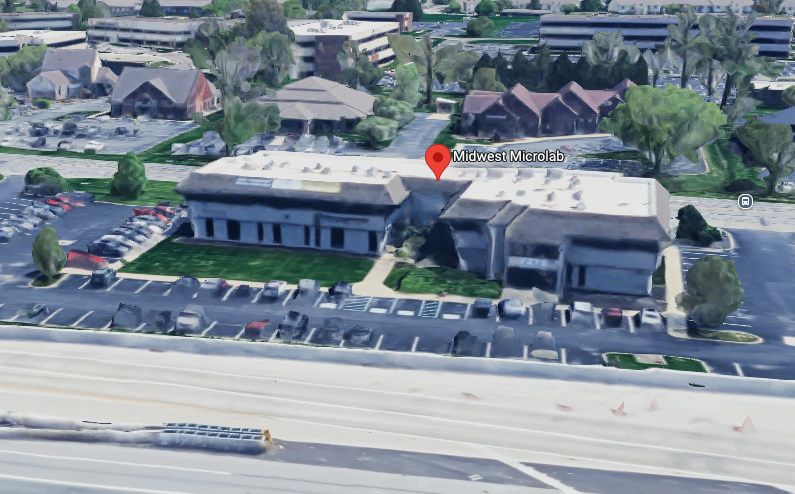
Midwest Microlab
Email Us
info@midwestlab.com
OFfice
7212 North Shadeland Ave
Suite #110
Indianapolis, IN 46250
Office Number: (317) 849-6606
Fax Number: (317) 849-8534
Monday - Friday
9am - 5pm