
Phosphorus Testing
Midwest Microlab is capable of testing solid or liquid samples for total percentage of Phosphorus with a range of 0.4% (4,000 ppm) to 100%. Accuracy for Phosphorus testing is +/- 0.4. Please refer below for a brief description of the Phosphorus analysis procedure including interferences and sample size. Air Sensitive / Glove Box handling is NOT available for Phosphorus analysis.
Additional Elements Testing
Oxygen Testing
Phosphorus Testing
Sulfur Testing
Finding Total Percentage of Phosphorus
Phosphorus Analysis & Techniques
Midwest Microlab performs Iodine analysis by Spectroscopy using a Spectrophotometer.
The appropriate size solid sample is weighed and inserted into a micro bomb. The bomb is then charged with the appropriate reagents to completely digest the compound. The apparatus is clamped shut and heated in a flame for 60 seconds. The contents are washed out and diluted.
The resulting mix is cooled and filtered. After a treatment, a complex forms. This has a unique golden-yellow color. The more phosphorus present the deeper the color.
This determination follows Beer’s Law. It is important for the analyst to initially know, theoretically, how much Phosphorus to expect. This is critical in selecting the proper sample size. Heavy amounts of SiO2 in the sample present an interference. Rinsing a sample with HCl prior to analysis can cause irregular results due to interferences with spectrophotometer wavelengths. Several other metals can also interfere.
Triphenylphosphate and triphenylphosphine are chemical standards commonly used in calibration for this determination.
Due to the excessive exposure of the sample to the environment in Phosphorus determination, we are not able to determine Phosphorus on air-sensitive samples.
Interferences Associated with Phosphorus Analysis:
Known Interference’s for Phosphorus Analysis include: transition Metals, Co, Cr, Fe, HCl, I, Ru, Si, SiO2, Sn, V, and Zr.
Please note the interferences above cannot be circumvented during analysis. Irregular results can be reported due to an interference within the molecular formula of the sample. Please note irregular results due to interferences cannot be interpreted by the chemists. Midwest Microlab chemists will perform requested analysis and report results as found with the understanding that the submitter understood the interferences associated and how it may affect results. Please indicate all elements or the molecular formula on the submission form
Suggested Sample Size according to Total Percentage Theory:
Theory % (P) Single (P) Duplicate (P) Triplicate
0-5 % 15 mg 30 mg 45 mg
5-20% 10 mg 20 mg 30 mg
Above 20% 5 mg 10 mg 15 mg
Phosphorus analysis is a complex and labor intensive determination. Standard Turnaround time for the total percentage of Phosphorus results is within 4-5 business days. RUSH services are available for an additional fee per sample, per analysis with per single run. Rush results turnaround time for Phosphorus analysis is within 3-4 business days.
Midwest Microlab does NOT handle any samples containing Osmium, Uranium, or Thallium within the molecular formula. Midwest Microlab is able to perform samples with Depleted Uranium but must be clearly indicated on the submission form. Please indicate on the comments section of the submission form if samples have a high toxicity or strong stench. We do not handle any Finished Pharmaceuticals for release or highly volatile liquid samples with boiling points of less than 40 deg C.
Phosphorus Analysis & Techniques: What is Phosphorus?
Atomic weight 30.97, Atomic Number 15, Melting Point 44.20 C, Boiling Point 280.50 C.
Phosphorus, (from the Greek language phôs meaning “light”, and phoros meaning “bearer”), is the chemical element in the periodic table that has the symbol P and atomic number 15. A multivalent nonmetal of the nitrogen group, phosphorus is commonly found in inorganic phosphate rocks and in all living cells.
This element exists in several allotropes, most commonly white, red and black. White phosphorus (P4) contains only four atoms, resulting in very high ring strain and instability. White phosphorus glows in the dark and is highly explosive as well as toxic.
Red has a network form which reduces strain and gives greater stability and does not catch fire in air at temperatures below 240°C. Whereas white ignites at about 40°C. Black is amorphous and is the least reactive allotrope.
Due to its high reactivity, the element is never found as a free element in nature. It emits a faint glow upon exposure to oxygen (hence its Greek derivation and the Latin meaning ‘morning star’) and is an essential element for living organisms.
The most important commercial use of P-based chemicals is the production of fertilizers. They are also widely used in explosives, nerve agents, friction matches, fireworks, pesticides, toothpaste, and detergents.
Relevant sites:
Chemical Reactivity
Organophosphorus compounds having phosphorus oxidation states ranging from –3 to +5, as shown in the following table, are well known (some simple inorganic …
Phosphotyrosine – Columbia Encyclopedia article about Phosphotyrosine
tyrosine (tī`rəsēn),organic compound, one of the 20 amino acids amino acid (əmē`nō), any one of a class of simpleorganic compoundscontaining carbon, …
inorganic phosphate- Columbia Encyclopedia article about …
Columbia Encyclopedia® article aboutinorganic phosphate.inorganic phosphate. …Inorganic compounds by element · InorganicCrystal Structure Database …
Get Started
Connect with
Midwest Microlab
Email Us
info@midwestlab.com
OFfice
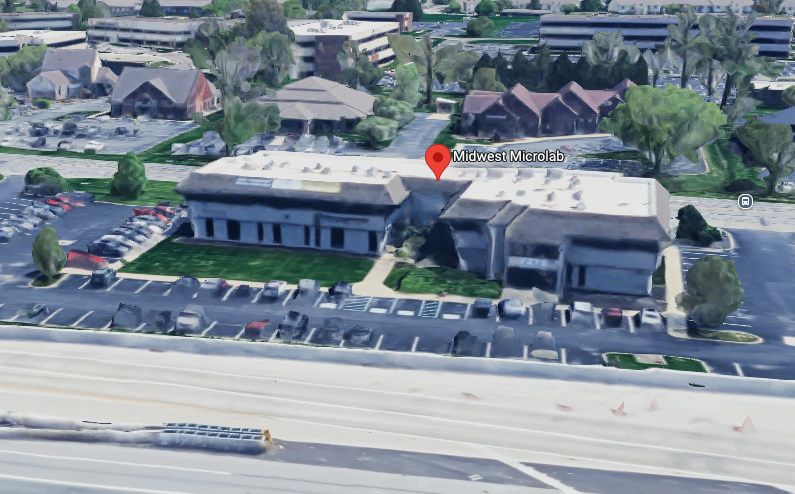
7212 North Shadeland Ave
Suite #110
Indianapolis, IN 46250
Office Number: (317) 849-6606
Fax Number: (317) 849-8534
Monday - Friday
9am - 5pm